
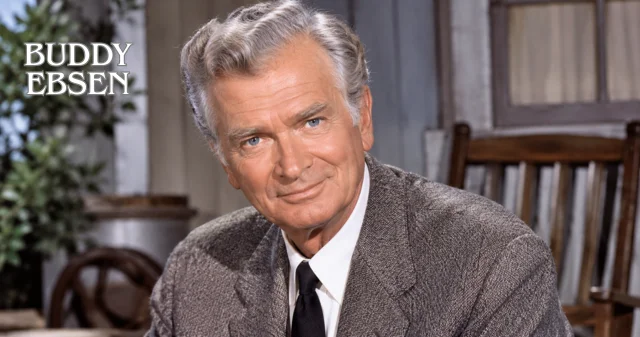
Buddy Ebsen was an American dancer, actor, and television star whose career lasted more than seven decades. He became famous as Jed Clampett on The Beverly Hillbillies and later led Barnaby Jones. He was also MGM’s original Tin Man before hazardous aluminum makeup forced him from The Wizard of Oz.
His path crossed Broadway, MGM musicals, wartime military service, Disney adventures, sitcom history, and detective drama. That range explains why American audiences remember him for more than one role. His career also includes one of Hollywood’s most famous casting stories.
Career at a glance
| Era | Career chapter | Why it matters |
|---|---|---|
| 1928–1935 | Broadway and vaudeville dancer | He built his career through dance before becoming a screen actor. |
| Mid-1930s | MGM movie musicals | Hollywood introduced his distinctive dancing style to national audiences. |
| 1938 | Original Tin Man | A dangerous makeup reaction removed him from The Wizard of Oz. |
| World War II | U.S. Coast Guard officer | He served aboard USS Pocatello and reached lieutenant before discharge. |
| 1950s | Disney’s Davy Crockett | Television brought him renewed national recognition. |
| 1962–1971 | Jed Clampett | The Beverly Hillbillies became his defining comedy role. |
| 1973–1980 | Barnaby Jones | He achieved another long-running television success in his sixties. |
Key takeaways
- He began as a professional dancer rather than a television actor.
- MGM originally filmed him as the Tin Man before a serious respiratory reaction.
- He served as a Coast Guard officer during World War II.
- Jed Clampett made him a major American television star during the 1960s.
- Barnaby Jones gave him another successful leading role during the 1970s.
- His interests also included sailing, painting, writing, and collecting coins.
Early life and a career built through dance
Ebsen was born Christian Ludolf Ebsen Jr. on April 2, 1908, in Belleville, Illinois. His family later moved to Florida, where his father operated a dance school. He studied pre-med before family financial problems pushed him toward professional dancing in New York. He arrived in New York in 1928 and found chorus work in Eddie Cantor’s Whoopee. He then formed a dance act with his sister, Vilma Ebsen.
Their Broadway and vaudeville work eventually led to an MGM screen test and Hollywood contract. His lanky frame became part of his unusual screen presence during Hollywood’s musical era. He appeared in Broadway Melody of 1936 and later danced with Shirley Temple. Those performances established him years before television made him a household name.
Why Buddy Ebsen left The Wizard of Oz
MGM initially cast Ebsen as the Scarecrow before he exchanged roles with Ray Bolger. He then became the Tin Man and began rehearsing, recording songs, and filming. The production used powdered aluminum to create the character’s metallic appearance. Repeated exposure caused a severe respiratory reaction after roughly ten days of filming. He required hospitalization and could not continue working on the movie.
Jack Haley replaced him, while the studio changed the Tin Man makeup process. The episode became one of the most discussed casting stories from classic Hollywood. No released movie footage shows him performing the completed Tin Man role. Still, recordings from his early work survived after he left production.
World War II changed his career trajectory.
World War II interrupted his entertainment work and brought him into military service. The Coast Guard commissioned him as a lieutenant junior grade after an earlier Navy application failed. He served aboard USS Pocatello, which performed weather patrol duties in the North Pacific. His shipboard assignments included watch officer, damage control officer, and executive officer. He later participated in War Bond events while assigned ashore in Seattle.
The Coast Guard honorably discharged him as a lieutenant in 1946. The military chapter is sometimes missing from shorter accounts of his Hollywood career. Yet it occupied several important years between his early film work and television success. It also connected his personal history with the American wartime experience.
From Disney adventures to The Beverly Hillbillies
Postwar acting work developed slowly until Walt Disney cast him beside Fess Parker in Davy Crockett. Ebsen played George Russel, Crockett’s friend and companion, in the popular television adventures. The role introduced him to millions of American families during television’s rapid growth. He continued taking film and television roles after his Disney success. One notable film was Breakfast at Tiffany’s, where he played Doc Golightly opposite Audrey Hepburn.
That quieter, dramatic appearance came shortly before his biggest television opportunity. Readers interested in other television careers can browse Magazetter’s entertainment coverage. The section includes profiles spanning actors, comedians, athletes, and other public figures. It provides useful context for how entertainment careers develop across different eras.
In 1962, producer Paul Henning cast Ebsen as Jed Clampett in The Beverly Hillbillies. The sitcom followed an Ozark family that became wealthy and moved to Beverly Hills. It quickly became one of American television’s most-watched programs. The CBS series ran for nine seasons and ended in 1971 after 274 episodes. Critics often disliked its broad humor, but television audiences embraced the Clampett family.
Ebsen gave Jed a quiet dignity that balanced the show’s more exaggerated personalities.
Barnaby Jones created another television chapter.
Two years later, the veteran performer returned as private investigator Barnaby Jones at age 65. The detective series ran from 1973 through 1980 and delivered another long-running leading role. Lee Meriwether co-starred as Betty Jones, his character’s widowed daughter-in-law. The part showed he could carry a drama after years of sitcom fame. He later appeared in Matt Houston and made a 1993 cameo in Barnaby Jones. His last television work included a 1999 voice appearance on King of the Hill.
That ability to shift formats is useful when comparing careers across television generations. Magazetter’s Rob McElhenney career profile examines a modern entertainer working across acting, writing, production, and sports. The careers differ greatly, but both show how television performers can expand beyond one defining project.
Family, writing, sailing, and life beyond acting
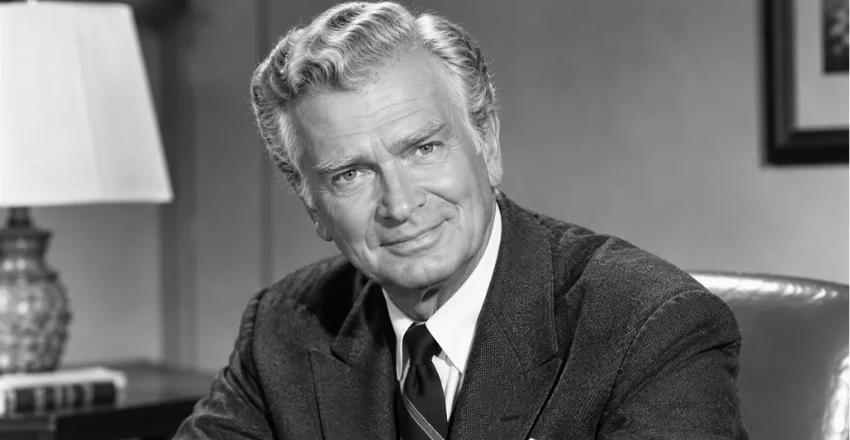
Ebsen married three times and had seven children through his first two marriages. His children included Elizabeth, Alix, Susannah, Cathy, Bonnie, Kiki, and Dustin. His third wife, Dorothy Knott, remained his spouse in his final years. Several children built careers or projects connected with entertainment, horses, editing, and charitable work. His daughter Kiki later performed musical tributes connected with her father’s life and career.
The family generally maintained more privacy than his television fame might suggest. Away from acting, he became an enthusiastic sailor, artist, writer, and coin collector. He won the 1968 Transpac race aboard his catamaran Polynesian Concept. He also produced folk-style artwork and wrote plays, nonfiction, an autobiography, and fiction.
His autobiography, The Other Side of Oz, appeared in 1994. The book looked beyond Jed Clampett and Barnaby Jones toward his earlier experiences. He later published Kelly’s Quest, extending his writing career into his nineties.
Death and an unusually long American entertainment legacy
Ebsen died on July 6, 2003, at Torrance Memorial Medical Center in California. He was 95 and had remained creatively active well into his later years. Contemporary reports confirmed his death after a period of hospitalization in Torrance. Reports differ slightly when describing the underlying medical cause. Early news coverage did not publicly identify the illness responsible for his hospitalization. Later biographical references have described complications connected with pneumonia.
His professional life stretched from vaudeville into the age of animated television. Few careers move through Broadway, MGM musicals, military service, Disney television, sitcoms, and detective dramas. That adaptability remains one of the clearest features of his entertainment legacy. For another major screen career, read Magazetter’s Penélope Cruz profile. You can also return to the site’s entertainment section for more biographies and career histories. Those pages connect classic Hollywood subjects with performers from later generations.
Frequently asked questions
What was Buddy Ebsen best known for?
He is best remembered for playing Jed Clampett in The Beverly Hillbillies. He later starred as the title detective in Barnaby Jones for eight seasons. His original Tin Man casting also remains an important part of Hollywood history.
Was he really the original Tin Man?
Yes, MGM filmed him as the Tin Man before aluminum powder caused a severe respiratory reaction. He became ill and required hospitalization before leaving the production. Jack Haley replaced him in the role seen in the finished movie.
How old was Ebsen when he died?
He was born on April 2, 1908, and died on July 6, 2003. He was 95 years old at the time of his death. He died at Torrance Memorial Medical Center in Torrance, California.
Did he serve in the military?
Yes, he served in the U.S. Coast Guard during World War II. He performed several duties aboard USS Pocatello before receiving a Seattle shore assignment. He received an honorable discharge as a lieutenant in 1946.
What was his net worth?
No publicly audited financial record establishes a definitive fortune at his death. Celebrity websites publish estimates, but those figures remain third-party calculations rather than verified accounts. Documented career history offers firmer information than an unsupported wealth estimate.