

Seeing blood in cat stool is unsettling, but the appearance can offer useful clues. Bright red streaks often come from the lower digestive tract. Black, tarry stool can signal digested blood and deserves prompt veterinary attention.
| What you see | What it may suggest | What to do |
| Small bright red streak | Lower bowel, rectal, or anal irritation | Call your vet and monitor closely |
| Bright red blood with diarrhea | Colon irritation, infection, parasites, or dietary upset | Arrange veterinary care promptly |
| Blood with hard, dry stool | Constipation or straining | Ask your vet about the cause and safe treatment |
| Black, sticky, tarry stool | Digested blood from higher in the digestive tract | Seek prompt veterinary assessment |
| Heavy bleeding or clots | More significant bleeding | Use an emergency veterinary clinic |
Blood in a cat’s stool can come from constipation, diarrhea, parasites, inflammation, infection, toxins, or other disease. Bright red blood usually points to the lower digestive tract. Black, tarry stool suggests digested blood from higher in the tract. Call a veterinarian promptly, and seek urgent care for heavy bleeding or illness.
Key takeaways
- Fresh red blood and black, tarry stool usually come from different parts of the digestive tract.
- A small streak can have a minor cause, but repeated bleeding still needs veterinary evaluation.
- Heavy bleeding, weakness, repeated vomiting, severe diarrhea, or pale gums can signal an emergency.
- Do not give human diarrhea medicines, pain relievers, or home remedies without veterinary direction.
- Photos and a fresh stool sample can help your veterinarian narrow down the cause.
What Blood in Cat Stool Can Look Like
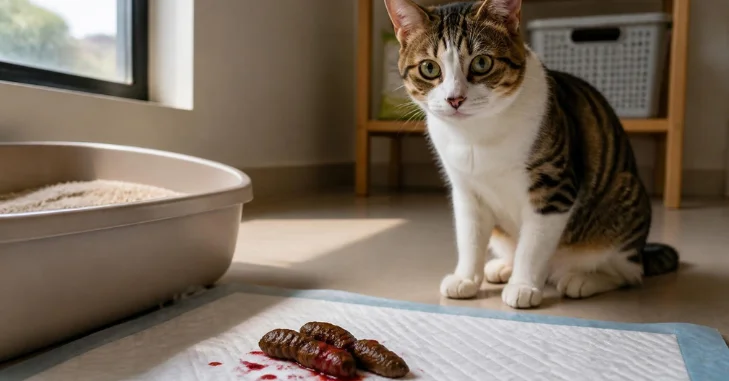
Veterinarians often describe fresh red blood as hematochezia. It usually comes from the colon, rectum, or anal area. You may see streaks, drops, mucus, or red blood mixed with loose stool.
Blood in Cat Stool can sometimes appear as a black, tarry stool called melena, which contains digested blood. Bleeding may come from the stomach or small intestine. The Cornell Feline Health Center reports that severe hookworm infection can make a cat’s feces black and tarry from digested blood, and that a cat can die without treatment if it loses too much blood this way. Treat melena as a reason to be seen the same day, not something to watch overnight.
Color alone cannot identify the exact cause of bleeding. Stool consistency, appetite, energy, vomiting, and straining also matter. If possible, take a clear photo before cleaning the litter box.
Eight Common Causes of Bloody Stool in Cats
Bloody stool is a symptom, not a diagnosis. Causes range from short-lived irritation to serious gastrointestinal disease. Your veterinarian uses the full pattern of signs to decide which causes fit best.
- Constipation: Hard stool and straining can irritate the rectum or anus and leave fresh red streaks.
- Diarrhea or colitis: Frequent loose stool can inflame the colon and cause blood or mucus.
- Intestinal parasites: Hookworms, Giardia, coccidia, and other parasites can cause diarrhea or gastrointestinal bleeding.
- Diet changes or food reactions: Sudden food changes or intolerance may trigger diarrhea and lower bowel irritation.
- Inflammatory bowel disease: Ongoing intestinal inflammation can cause diarrhea, weight loss, vomiting, or blood.
- Infections: Some bacterial, viral, or fungal infections can damage the digestive tract and cause bleeding.
- Foreign material or trauma: Swallowed objects, sharp material, or injury can damage gastrointestinal tissue.
- Toxins, medication effects, or growths: Rodenticides, ulcers, clotting problems, polyps, and tumors can cause bleeding.
Cornell’s feline health guidance puts gastrointestinal parasite prevalence at up to 45% in some cat populations and lists bloody or mucousy feces among the signs. Parasites, inflammation, and bleeding disorders can all look alike in the litter box. That is why testing beats guessing at a cause from appearance alone.
When Is Blood in a Cat’s Stool an Emergency?
A tiny red streak in an otherwise comfortable adult cat may not require an after-hours emergency visit. It still warrants a same-day call to your veterinarian rather than a week of waiting. Repeated blood, worsening stool, or new symptoms increase the urgency.
Seek emergency veterinary care when bleeding is heavy, or your cat seems systemically ill. Weakness, lethargy, pain, repeated vomiting, and severe diarrhea alongside blood are urgent warning signs. Pale, blue, or deep red gums also warrant immediate attention.
- A large amount of blood or repeated bloody diarrhea.
- Black, sticky, tar-like stool with weakness or poor appetite.
- Repeated vomiting or inability to keep water down.
- Marked lethargy, collapse, pain, or unusual hiding.
- Pale gums or other signs of possible blood loss.
- Known or suspected exposure to rodenticide, medication, or toxin.
- A very young kitten, frail senior, pregnant cat, or cat with chronic disease.
Suspected poisoning needs fast action in the United States. The ASPCA Animal Poison Control Center operates around the clock at 888-426-4435. Pet Poison Helpline also provides 24-hour help at 855-764-7661, and consultation fees may apply.
What to Do Today Before the Vet Visit
Your first goal is to document what happened without delaying needed care. Watch your cat’s behavior, appetite, drinking, stool frequency, and litter box straining. Keep notes because small details can change your veterinarian’s triage advice.
- Take a photo of the stool before cleaning the litter box.
- Save a fresh stool sample in a clean, sealed container if your clinic requests one.
- Write down recent food changes, medications, supplements, stressful events, and possible toxin exposures.
- Keep fresh water available unless your veterinarian gives different instructions.
- Call your veterinary clinic and describe the blood color, amount, stool texture, and other symptoms.
- Use an emergency clinic if serious warning signs develop while you are monitoring.
Avoid giving human medications unless a veterinarian specifically directs you to do so. Some common human drugs are dangerous for cats. Never give over-the-counter diarrhea medicines on your own initiative, because some of them are toxic to cats.
You can find more general animal-care reading in Magazetter’s pet guides. Breed owners may also find the Norwegian Forest Cat care guide useful. These internal resources provide broader context, but they do not replace veterinary assessment.
What Your Veterinarian May Check
The visit usually starts with your cat’s history and a physical examination. Your veterinarian may ask when bleeding started and how often it occurs. Diet, outdoor access, medications, travel, and household changes may also matter.
Fecal testing can detect parasites and other gastrointestinal issues. Blood work may help assess anemia, inflammation, organ function, or dehydration. Urinalysis can add context when illness extends beyond the digestive tract.
Imaging may be needed when a foreign body, mass, or structural problem is possible. X-rays or ultrasound can help guide the next step. Endoscopy, surgery, or tissue biopsy may be considered when simpler testing does not explain persistent bleeding.
Can Food Cause Bloody Poop?
Food can contribute to bloody diarrhea in some cats. A sudden diet change may upset the digestive tract and cause temporary diarrhea. Food intolerance or allergy can also contribute to intestinal inflammation in certain cats.
Don’t assume food is the cause just because the timing seems convenient. Parasites, infection, constipation, inflammatory disease, and other problems can look similar. Persistent bleeding needs veterinary evaluation, not repeated home diet experiments.
If your veterinarian recommends a food trial, follow the plan closely. Sudden switches can create more digestive upset and confuse the picture. Ask how quickly to transition foods and which treats or supplements to avoid.
Kittens and Older Cats Need Extra Caution
Kittens can lose fluids quickly when diarrhea accompanies bleeding. Parasites are also common in young cats and may require specific testing. A kitten with poor appetite, vomiting, weakness, or repeated bloody stool needs prompt veterinary care.
Older cats may have chronic diseases that change the meaning of gastrointestinal signs. Kidney disease, liver disease, cancer, and medication effects may complicate the picture. Tell the veterinarian about every prescription, supplement, and recent health change.
Age alone does not reveal the cause, so avoid self-diagnosis. The same visible blood can come from different problems in different cats. Faster evaluation is sensible when your cat is medically fragile, or symptoms are escalating.
Your Next Step
Treat blood in a bowel movement as a sign worth checking, not a diagnosis. Call your veterinarian and describe the color, amount, stool texture, and accompanying symptoms. Seek emergency care if bleeding is heavy or your cat appears ill.
Return to our broader feline coverage once your cat’s immediate needs are addressed. When symptoms change, follow your vet’s advice over online guidance. Early evaluation can prevent a manageable problem from becoming harder to treat.
Frequently Asked Questions
Is blood in cat stool always an emergency?
Not always, but it always deserves a same-day call to your veterinarian. A tiny fresh streak in an otherwise normal adult cat may not require after-hours emergency care. Heavy bleeding, black stool, vomiting, weakness, pain, or severe diarrhea mean your cat needs to be seen right away.
Why is my cat pooping blood but acting normal?
Mild constipation, lower bowel irritation, parasites, or a diet-related problem may cause small amounts of blood. Cats can also hide illness well. Call your veterinarian if bleeding repeats, increases, or comes with any behavior change.
What does bright red blood in cat poop mean?
Fresh red blood usually points to bleeding near the end of the digestive tract. The colon, rectum, or anal area may be irritated. Common possibilities include colitis, diarrhea, constipation, parasites, or local injury.
What does black, tarry cat poop mean?
Black, sticky, tar-like stool may contain digested blood. That pattern can indicate bleeding higher in the gastrointestinal tract. Contact a veterinarian promptly, especially if your cat seems weak, painful, or unwilling to eat.
Should I bring a stool sample to the veterinarian?
A fresh sample can help with fecal testing. Ask the clinic how they want you to collect and store it. Bring a photo too because the sample may not show the same blood pattern later.